
A family arrives at church hoping to worship together. Before they reach the classroom, their child has already encountered a crowded entrance, loud music, unfamiliar faces, and several people offering enthusiastic greetings.
Then comes the request: “Come sit on the carpet!”
For some children, that is an easy transition. For others, it is one more demand when they are already overwhelmed.
As a pediatric occupational therapist, I think often about what we ask children to manage before we ever ask them to listen, participate, or learn. The sounds, lighting, movement, and expectations in a space can all affect how a child experiences it.
A quiet room can be a wonderful support. But creating a sensory-friendly church also means looking at the everyday experiences happening throughout the building.
You do not need a large budget or specialized equipment to begin. These seven simple changes can help children and families feel more comfortable, supported, and connected to your church community.
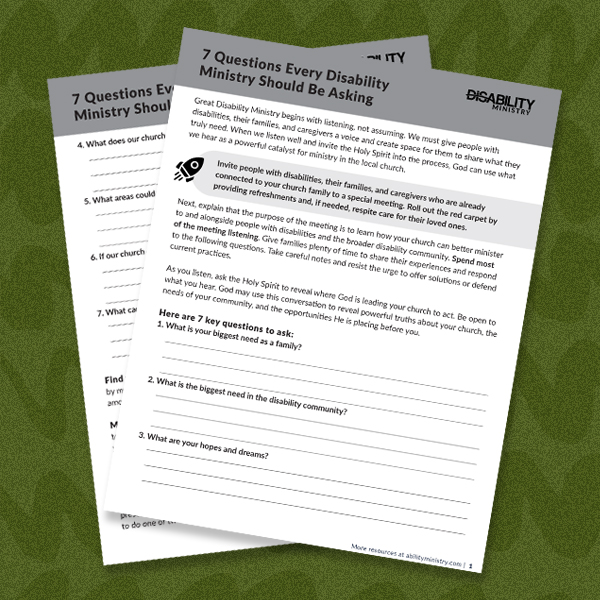
One of the most useful tools you have is a conversation.
Before a child’s first visit—or when you notice that participation is becoming difficult—ask their parent or caregiver:
Include the child in the conversation in whatever way works for them. They may tell you, point to a choice, use a communication device, or show you through their actions.
Children with the same diagnosis can have very different preferences and needs. A strategy that helps one child may bother another.
Start with curiosity, and let the family’s knowledge guide your approach.
Church can involve a lot of transitions: arriving, separating from a parent, joining a group, singing, listening, completing an activity, and leaving.
Knowing what comes next can make those transitions easier.
Create a simple picture schedule using photos, printed images, or hand-drawn symbols. A children’s ministry schedule might show:
Welcome → Music → Bible Story → Activity → Prayer → Pickup
Review it at the beginning and refer to it throughout the session. Give a brief warning before changing activities: “We have two more minutes with the blocks. Then we will hear our story.”
If something changes, explain it as clearly as you can.
You can also share photos of the classroom, entrance, and ministry leaders before a family visits. Familiarity can begin before they walk through the door.
Many church activities ask children to be still. Building in opportunities to move gives them another way to participate.
Try inviting children to:
Offer seated versions and let children choose whether to join.
Movement can also happen during transitions. A few floor markers might invite children to step, pause, and stretch on their way into the classroom, with a clear route available for anyone who prefers to pass.
Watch the child’s response. Some children return from movement ready to engage; others may need a slower activity or a quieter transition.
Walk through your church at a child’s height and pay attention.
Is a speaker especially loud near the children’s seating? Does a chair scrape sharply across the floor? Are decorations hanging where they brush against someone’s face? Is the classroom entrance crowded?
Small adjustments can help:
You do not have to make every room silent. The goal is to notice avoidable discomfort and offer choices where you can.
A break space can be as simple as a quieter corner with a chair, a few books, and a small selection of appropriate sensory tools.
Choose a location that fits your church’s supervision and child-protection procedures. Make sure volunteers know how children can access it and how support will continue while they are there.
Introduce it in welcoming language:
“If you need a quieter place, you can take a break here.”
Avoid using it as a consequence. Children should not have to become distressed before they are allowed to step away.
Some children will want to return quickly. Others may need more time or a different way to participate. Work with the child and family rather than making a quick return the measure of success.
Listening does not always look like sitting still with eyes on the teacher.
A child may listen while standing beside a chair, holding a small fidget, moving gently, or looking away. Another may prefer to watch an activity before joining.
Consider offering choices:
“Would you like to sit in a chair or stand beside me?”
“You can sing, do the motions, or listen.”
“Would you like to answer out loud or point to the picture?”
Choose tools thoughtfully and match them to the child’s age and needs. A fidget is helpful when it supports that child’s participation; it does not need to be part of every child’s experience.
Making room for different responses gives children more ways to connect with the same lesson and community.
Volunteers do not need to become therapists. They do need a shared understanding of how to respond when a child is struggling.
Teach them to pause, use fewer words, speak calmly, and offer a familiar choice. When a child is overwhelmed, repeated questions and lengthy explanations can add more to process.
Try:
“It’s loud in here. Would you like to move over here?”
“You can take a break. I’ll stay nearby.”
Ask families what signs to watch for before distress builds. Covering ears, withdrawing, pacing, or trying to leave may communicate that something is becoming too much.
Keep communicating afterward, too. “What seemed to help today?” is a useful question for both volunteers and families.
You do not need to redesign your entire ministry this week.
Start by asking one family what would help. Add a picture schedule. Offer a movement break. Find a quieter seating option.
Then notice what happens and keep listening.
For a family who has spent years wondering whether church will work for their child, a thoughtful adjustment can mean a great deal. It communicates that their child’s needs matter and that your community is willing to learn.
A sensory-friendly church makes room for children to worship, learn, move, rest, and connect in different ways.
And through those everyday choices, we can help families experience a powerful message:
Trisha Klausing is a pediatric occupational therapist and the founder of Sacred Steps Sensory Paths. She helps schools, churches, and other organizations incorporate purposeful movement and sensory supports into everyday spaces, with a passion for helping children of all abilities feel welcomed and included. https://www.sacredstepssensorypaths.com