You know the drill. A child with autism joins the Sunday school class, and the conversation immediately turns to accommodation. How do we help them adjust? How do we modify the lesson? How do we manage the behavior? How do we help them fit in?
And those are not wrong questions. Accessibility and accommodation matter enormously. But here’s the question we almost never ask:
What are we doing to prepare the other kids in that room?
Not just to tolerate. Not just to be “nice.” Not just to awkwardly share crayons and move on. But to genuinely, enthusiastically, theologically embrace their peers with disabilities — to see them the way God sees them; to want them in the room the way God wants them in the Body?
We have poured enormous energy into helping kids with disabilities adapt to a neurotypical world. That work is necessary and good. But we have largely left the neurotypical kids to figure out disability on their own — which means they figure it out from a culture that teaches staring, inspiration porn, and pity. And then we wonder why our inclusive classrooms still feel like two separate worlds sharing the same carpet.
The problem isn’t inclusion. The problem is that we’ve only ever taught inclusion to half the room.
What the Bible Actually Says
This isn’t just a social skills issue. It’s a theological one.
Genesis 1:27 tells us every human being — every single one, regardless of neurotype, diagnosis, or ability level — is made in the imago Dei, the image of God. That means the nonspeaking child rocking in the back of the room is bearing the image of the living God into that space. The child with Down syndrome singing off-key at the top of his lungs is reflecting something of the divine. The teenager with cerebral palsy who processes the world differently than her peers carries the thumbprint of her Creator in a way that is utterly irreplaceable.
Psalm 139 doesn’t say God knit together the neurotypical kids carefully and everyone else was an afterthought. It says all of us were knit together, known before birth, fearfully and wonderfully made.
And then 1 Corinthians 12 drops the framework that changes everything: the Body of Christ is not complete without its “weaker” members. Paul doesn’t say the body tolerates them. He doesn’t say the body accommodates them. He says they are indispensable. The eye cannot say to the hand, “I don’t need you.” Not because it would be rude — but because it would be wrong. It would be a lie about the nature of the Body.
When our neurotypical kids don’t learn this, they grow into adults who run churches that are accidentally but effectively inaccessible. Not out of malice — but out of ignorance we could have corrected in third grade.
The Difference Between Tolerance, Acceptance, and Embrace
We need to be honest about how low the bar has been set.
Tolerance says: I will not be mean to you. It is the floor, not the ceiling. It is the bare minimum of human decency, and we should not confuse it with discipleship.
Acceptance says: You are welcome here. Better. Warmer. But still essentially passive — a permission granted rather than a chosen pursuit.
Embrace says: I need you here. This place is not whole without you. I am going to go out of my way to be in relationship with you, because God put you in this Body for a reason and I want to know what that reason is.
That third one is what we’re after. That’s what 1 Corinthians 12 is describing. That’s what we are almost never teaching our neurotypical kids — and it is absolutely something that can be taught, modeled, and practiced starting in children’s ministry.
Action Steps for Churches, Children’s Ministries, and Youth Ministries
1. Start with Theology, Not Etiquette
The most common approach to disability awareness in children’s ministry is essentially an etiquette lesson: don’t stare, be kind, use nice words. That’s not bad, but it starts in the wrong place. It starts with behavior rather than belief.
Start with the Bible instead. Teach imago Dei explicitly and early. Ask your kids: “If every person is made in the image of God, what does that mean about how we look at people who seem different from us? What part of God’s image might we only be able to see through them?”
Teach 1 Corinthians 12 not as a passage about spiritual gifts but as a passage about the body — the actual community of people sitting in your room right now. Ask: “Who in our church might be the ‘indispensable’ member that we’re missing when they’re not here?”
When theology leads, behavior follows from the inside out rather than the outside in. That’s the difference between a kid who doesn’t stare because they were told not to, and a kid who doesn’t stare because they genuinely see a fellow image-bearer in front of them.
2. Use Storytelling and Literature Intentionally
Kids learn empathy through stories. This is how God wired them — it’s why Jesus taught in parables. Use that.
Build a library of children’s and youth books that feature protagonists with disabilities — not as the “lesson” character but as the hero of the story. Let kids spend extended time inside the perspective of a character who experiences the world differently. Follow up with discussion: What was hard for this character? What did they see or notice that the other characters missed? What did they offer that no one else could?
For older kids and teenagers, go deeper: read accounts from self-advocates in the disability community. Listen to disability theologians. Watch documentaries made by disabled people, not just about them. The goal is to shift the neurotypical child’s posture from observer to student — someone who has something to learn from their disabled peers, not just something to offer them.
3. Create Genuine Relationship Structures, Not Just Proximity
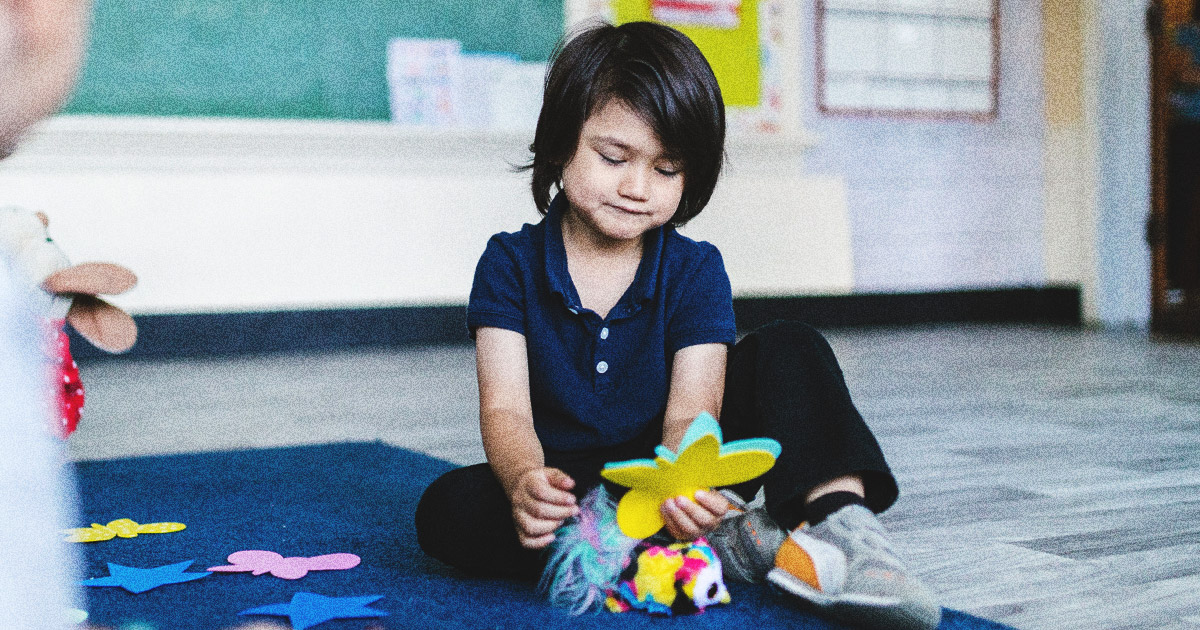
Putting neurotypical kids and kids with disabilities in the same room is not inclusion — it is proximity. Inclusion requires relationship, and relationship requires intentional structure, because kids (like adults) default to comfortable sameness when left to their own devices.
Build ministry activities that require genuine collaboration and mutual contribution. Not “helper” and “helped,” but actual shared projects where different strengths matter. The kid who processes information differently might be the one who notices something everyone else missed. The nonspeaking child who communicates through art might produce something that opens up a conversation no one else could have started.
Train your volunteers and small group leaders to narrate these moments out loud: “Did you notice how Eli solved that problem? That’s how his brain works, and it’s amazing.” Neurotypical kids need adults to help them see what they might otherwise overlook.
4. Give Neurotypical Kids Language
One of the biggest barriers to genuine relationships is the fact that neurotypical kids often desperately want to connect but have no idea what to say or do, and the fear of saying the wrong thing leads them to say nothing — which reads, from the other side, as rejection.
Teach them language. Not scripts, but frameworks. Things like:
Teach them that silence and presence are valid forms of friendship. Teach them that asking questions respectfully is almost always better than pretending not to notice. Teach them that their job is not to fix, heal, or normalize their disabled peers — it’s to know them.
Role-play these scenarios. Practice them. Make it normal to talk about.
5. Elevate Disabled Voices in Your Ministry
If the only time kids encounter disability in your ministry is during a lesson about “being kind to different people,” you are unintentionally teaching them that disability is a problem to be addressed rather than a perspective to be valued.
Change that by putting disabled people in positions of visible leadership, contribution, and voice. Invite a disability advocate to speak to your youth group — not about what it’s like to struggle, but about what they see, believe, create, and offer. Feature the artwork, music, or writing of disabled members of your congregation in your worship space. When planning ministry programs, ask your disabled members what they would add to the community — not just what they need from it.
When neurotypical kids see disabled people leading, teaching, and contributing — not just being served — it fundamentally rewires their imagination for what the Body of Christ looks like.
6. Coach Parents, Not Just Kids
The conversation your kids have in the car on the way home from church matters at least as much as anything that happens in your classroom. And many well-meaning parents are undoing discipleship in real time by saying things like, “That must be so hard for that family,” or “Wasn’t it sweet how you helped him?” framing disability as tragedy and their child as rescuer.
Equip parents with the same theological framework you’re building in their kids. Send home a one-page conversation starter after a lesson on imago Dei. Host a parent night on disability theology. Give parents language to use in those car ride conversations that reinforces embrace rather than pity.
When the home and the church are teaching the same thing, it sticks.
7. Let Disabled Kids Lead the Lesson
This one requires care and should never be done in a way that puts a child on display without their enthusiastic consent — but when a disabled child or their family wants to share their perspective and experience, create genuine space for it.
Let a teenager with autism talk to the youth group about how they experience worship. Let a child who communicates through AAC (augmentative and alternative communication) lead the prayer. Let the family of a child with Down syndrome share what their child has taught them about joy, presence, and faith.
This is not a “show and tell” moment. It is a theology lesson. It is the Body of Christ showing itself to itself — and it is one of the most powerful things your ministry can offer.
The Church We’re Building
Here is the long game: the neurotypical eight-year-old in your Sunday school class is going to grow up and vote on whether your church builds a sensory room. She is going to be the small group leader who either notices or doesn’t notice the newcomer with social anxiety. He is going to be the deacon who champions accessibility in the building budget — or the one who asks why we’re spending money on “that.”
The seeds of that future church are being planted right now, in your classrooms, on your campuses, in the stories you tell and the theology you teach.
We have a generation of kids who have been told to be tolerant. We have the opportunity to raise a generation that is transformed — that walks into a room and genuinely lights up when they see the full image of God represented in it, who understand in their bones that the Body is incomplete without every member, and who will spend their lives building the kind of church where everyone knows they’re not just welcome, but needed.
That church is worth building. And it starts with teaching the right things to the right kids — all of them.