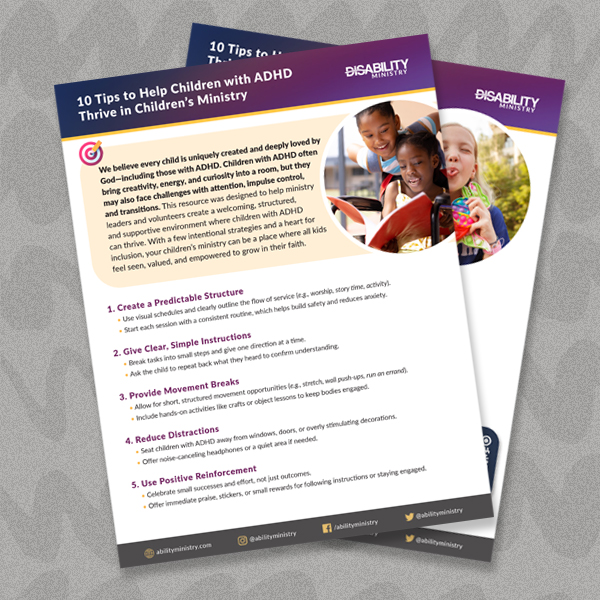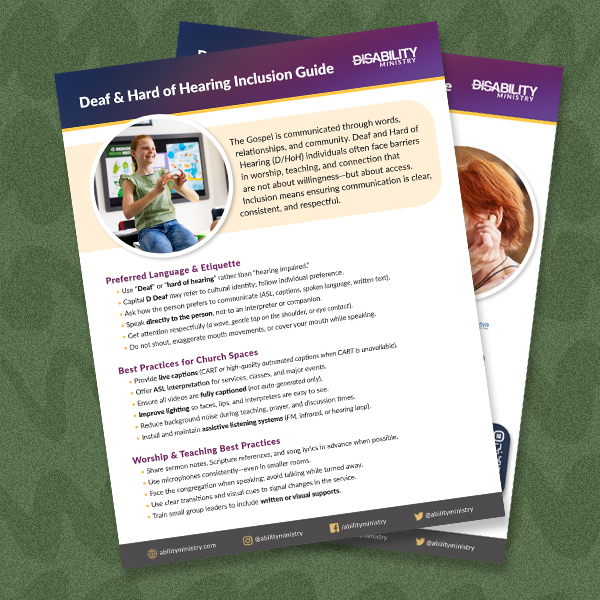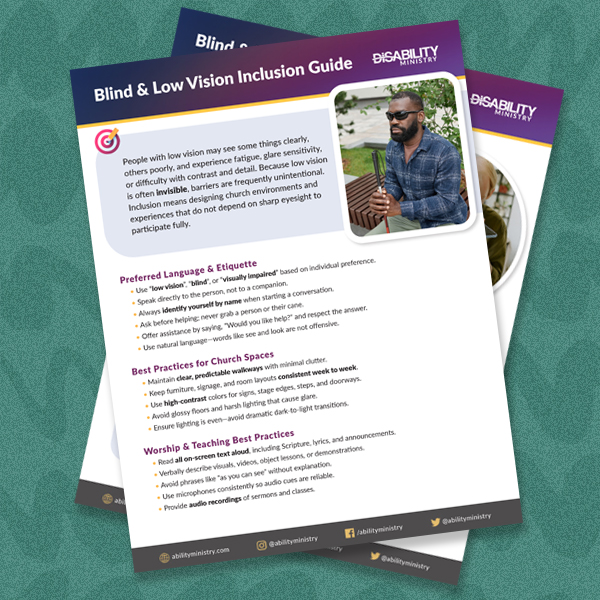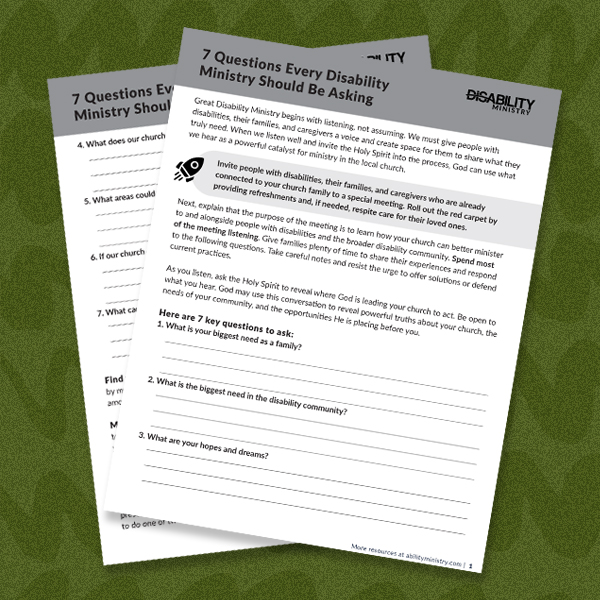

Sometimes, ministry doesn’t go according to plan. A volunteer calls in sick, a student needs extra support, or you find yourself stepping into a classroom with someone whose needs you don’t fully understand. You may not have time for extensive training, but you can still make a meaningful difference. This five-minute crash course won’t teach you everything you need to know, but it will give you five essential principles to help you serve with greater confidence, compassion, and understanding.
1. Start with the Person, Not the Disability
Every person is created in the image of God and deserves to be treated with dignity, respect, and kindness. A diagnosis doesn’t tell you everything about a person.
Learn their name, talk directly to them, and look for ways to connect. Treat them according to their age, not their perceived ability.
2. Ask Before You Help
Your desire to help is wonderful, but assuming what someone needs can lead to frustration or unintentionally take away their independence.
Ask, “Would you like some help?” Give the person time to respond and respect their answer. When possible, ask the person or someone who knows them well what works best.
3. Communicate Clearly and Give Time
Some people need extra time to process information, understand instructions, or communicate a response. Others may communicate without words.
Use clear, direct language. Give one instruction at a time, allow time for a response, and use gestures, pictures, or demonstrations when helpful. Don’t mistake silence for not understanding.
4. Focus on Belonging, Not Just Behavior
A person who moves around, makes unexpected noises, avoids eye contact, or struggles to participate in the usual way may still be learning, listening, and worshiping.
Look beyond what seems different. Consider whether the environment, activity, or expectations need to change. Offer choices, breaks, or sensory support when appropriate. Your goal is meaningful participation, not simply getting someone to sit still.
5. You Don’t Have to Figure It Out Alone
You are not expected to know everything about disability ministry, especially when you’re stepping in at the last minute. The person, their family, and experienced ministry leaders can help you understand what works best.
Ask questions, follow the helpful information located on the individual’s information sheet, and get help when you’re unsure. Never guess about medical needs, personal care, safety concerns, or a person’s individual support plan.
One Last Word of Encouragement
You don’t have to be an expert to make a difference. You just have to be willing to learn, connect, and care. You may not get everything right, and that’s okay. Be patient, be flexible, and remember that your presence matters. You’re not simply helping someone get through a church service; you’re helping make room for them to belong to the body of Christ.