Purpose
To provide safe, respectful, and dignified bathroom and personal-care assistance for children and adults with disabilities while protecting participants, families, and volunteers.
Children with Disabilities
- Independent toileting: Allow children who can use the restroom independently to do so. A volunteer may supervise from outside the restroom while respecting the child’s privacy.
- Toileting assistance: When a child requires physical assistance, two approved adults should be present whenever reasonably possible.
- Diaper changing: Two approved female adults must be present for all changes.
- Changing location: Use a designated restroom or changing area whenever possible and follow the child’s established care instructions.
- Safety & dignity: Use gloves and a disposable changing pad. Keep the child appropriately covered, provide only the assistance needed, and encourage independence. Do not unnecessarily discuss an individual’s toileting or personal-care needs.
- After changing: Clean and disinfect the changing surface and properly dispose of diapers and other waste. Notify maintenance/custodial staff when additional cleaning or waste removal is required.
- Concerns: Report injuries, unusual circumstances, or other concerns to the ministry leader immediately. Fill out an incident report form. The ministry leader should follow up with the parent/guardian/caregiver.
Adults with Disabilities
- Independent toileting: Adults who can use the restroom independently should be allowed to do so privately. A volunteer should remain nearby for safety.
- Toileting assistance: When an adult requires physical assistance, two approved adults should be present whenever reasonably possible.
- If an adult arrives with a staff member who normally provides personal care, that staff member should handle the procedure whenever possible.
- Diaper changing: Two approved adults must be present for all diaper changes.
- Practice gender-matched assistance: Male volunteers assist male adult participants; female volunteers assist female adult participants.
- Consent & dignity: Treat adults as adults. Explain the assistance needed, obtain consent whenever possible, maintain privacy, and provide only the assistance necessary. Do not unnecessarily discuss an individual’s toileting or personal-care needs.
- Care instructions: Follow the individual’s established care plan and instructions provided by the individual, family, guardian, or designated caregiver.
- After personal care: Clean and disinfect surfaces and properly dispose of waste. Notify maintenance/custodial staff when additional cleaning or waste removal is required.
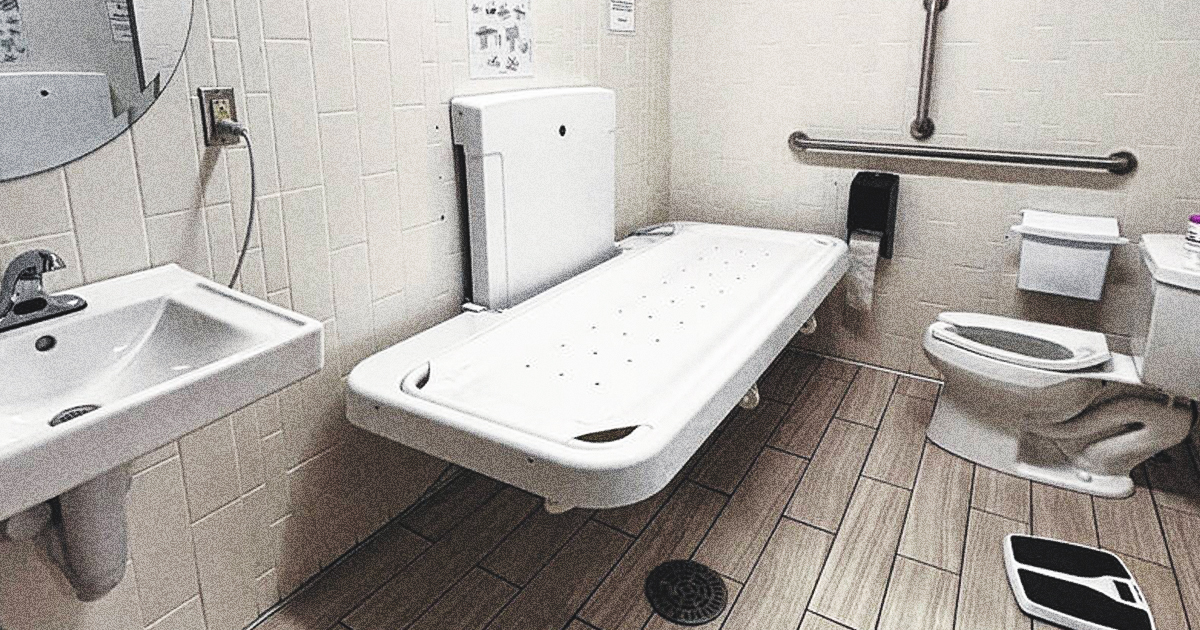
- To protect the dignity of adults who require personal care, provide a universal-sized changing table in a private space. Never lay an adult on the floor of a public restroom. If your church does not have a universal-sized changing table, make adding one to a family restroom a priority.
- Concerns: Report injuries, unusual circumstances, allegations, or other concerns to the ministry leader immediately. Fill out an incident report form. The ministry leader should follow up with the parent/guardian/caregiver.
General Guidelines
- Parents/guardians/caregivers must provide the ministry with relevant information regarding toileting, changing, communication, and personal-care needs.
- Never leave a participant unattended on a changing table or other elevated surface.
- Never photograph or record a participant while providing personal care.
- Volunteers should provide only care for which they have been trained and authorized. Volunteers who do not feel comfortable are not required to help.
- If a second adult is not available, contact the ministry leader for assistance whenever circumstances permit.
- In an emergency, protect the participant’s safety first and notify ministry leadership as soon as possible.
- When in doubt: protect dignity, maintain appropriate supervision, and ask for help.