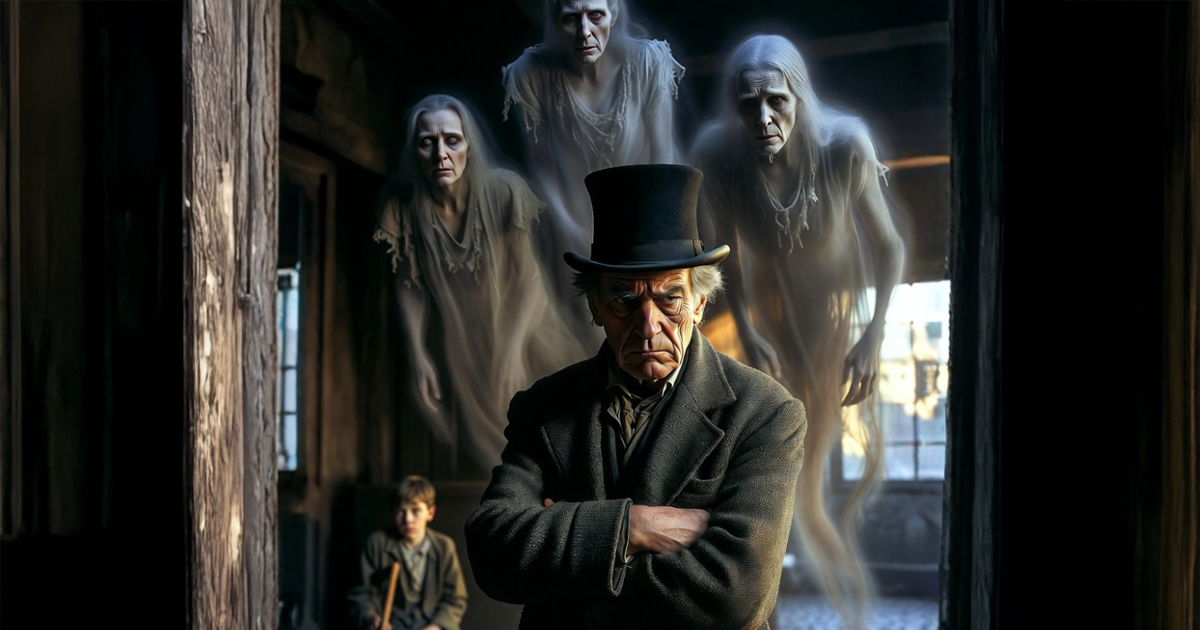
When most people think of A Christmas Carol, they remember Ebenezer Scrooge, the ghosts, the lessons learned, and the redemption arc. But tucked quietly within Dickens’ classic is one of the most powerful—and often misunderstood—images of disability in all of Christmas literature: Tiny Tim.
Crippled, frail, and walking with a crutch, Tim has what we would now describe as a mobility impairment. But Dickens does something revolutionary for his time—and still deeply needed in ours.
He refuses to make Tiny Tim a character of pity.
Tim isn’t “broken.”
He isn’t a burden.
He isn’t an object lesson meant to shame people into charity.
He is joyful.
He is wise.
He is beloved.
And his life has value not because he “inspires” others, but simply because he exists.
In the story, Tiny Tim becomes the emotional turning point for Scrooge. Not because Tim is helpless or tragic, but because Scrooge finally sees him—really sees him—as a person with dignity and worth. Scrooge’s transformation isn’t just about generosity; it’s about awakening to the sacredness of another human life.
That’s the turning point for all of us.
Because the world still struggles to see people with disabilities the way Dickens saw Tiny Tim. We often default to two extremes:
Both dehumanize.
Both flatten a person into a symbol rather than a soul.
Tiny Tim is neither. Dickens preserves Tim’s humanity. He laughs, he hopes, he belongs, and he is deeply loved. His disability is part of his life, but not the definition of his identity.
As churches approach the Christmas season, Tiny Tim’s story becomes more than literature—it becomes a reminder.
People with disabilities don’t need to be “fixed” to belong.
They don’t need to “inspire” us to have value.
They don’t need to be cast as heart-warming symbols to justify their presence in our pews.
Tiny Tim’s worth comes from the same place yours and mine does:
He was made in the image of God.
He is loved by God the Father.
His life reflects the beauty and dignity of the One who created him.
And that truth is timeless.
At the end of the story, Tim’s iconic line rings out—not as a moment of cliché, but as a declaration of belonging:
It isn’t sentimental.
It isn’t inspirational fluff.
It’s a proclamation that every person—disabled or not—is part of the family. Part of the community. Part of the blessing.
In a world where many people with disabilities are still excluded, overlooked, or underrepresented, Tiny Tim’s voice echoes across time with a challenge:
See me.
Value me.
Welcome me.
Not because I make you feel something.
Not because my story motivates you.
But because I matter.
As we hang lights, sing carols, and prepare for Christmas services, Dickens quietly invites us to revisit a small boy with a crutch who changed the heart of one of literature’s hardest men.
Tiny Tim didn’t change Scrooge by inspiring him.
He changed him by existing—and being seen.
This Christmas, may our churches and communities do the same.
May we see every person with disabilities with the dignity God the Father has already placed on their lives.
May we build spaces where belonging is the starting point, not the reward.
And may our welcome be as wide as Tim’s blessing:
God bless us, every one.