On the night Jesus was born, heaven didn’t make the announcement the way anyone expected.
There was no royal trumpet in Jerusalem.
No proclamation in Rome.
No elite audience, no powerful leaders, no religious giants gathered for a divine reveal.
Instead, the announcement that would change all of history was delivered to a group of people most of society overlooked:
Shepherds.
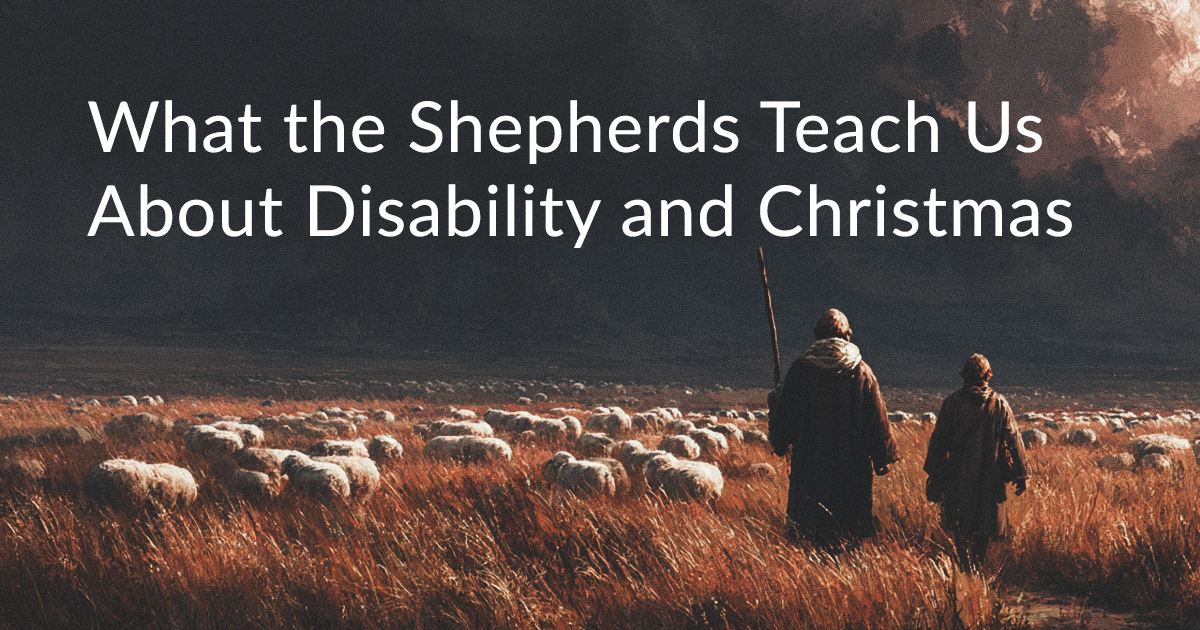
And not the romanticized version on our Christmas cards—clean robes, gentle expressions, perfectly posed with lambs. Shepherds in Jesus’ day lived a very different reality.
They were considered lower class.
They smelled like the animals they cared for.
They lived on the outskirts—literally and socially.
Their work made them ritually “unclean,” meaning they were often kept at a distance from religious life.
People didn’t seek them out. They didn’t have influence.
They were not the ones anyone expected God to single out.
And yet…
When the moment came for heaven to announce the arrival of the Messiah, the angels said:
“Do not be afraid. I bring you good news of great joy that will be for all the people.”
(Luke 2:10)
And then God proved he meant all by telling the shepherds first.
Not the powerful.
Not the perfect.
Not the polished.
Not the socially approved.
The overlooked got front-row seats to the miracle.
If we’re honest, the world still divides people into categories of “important” and “less important.”
“Normal” and “different.”
“Included” and “othered.”
And when we think about disability, too often society slips into the same broken patterns ancient Israel held toward shepherds:
People are talked about, not talked with.
They’re pitied instead of partnered with.
They’re kept at a distance instead of brought close.
They’re underestimated, overlooked, or treated like they don’t fully belong.
But the angels’ message still stands, unedited, unchanged, unsoftened:
Good news.
Great joy.
For all people.
“All” didn’t have an asterisk 2,000 years ago—and it still doesn’t today.
When the angels appeared to the shepherds, God wasn’t making a random choice—he was making a statement.
He was saying:
“If you think someone is too low, too messy, too unimportant, too marginalized… that’s exactly who I’m coming for.”
The shepherds weren’t a PR mistake; they were the perfect first recipients because they showcased a truth we still forget:
God moves toward the people the world moves away from.
The world said shepherds were unclean.
God said they were invited.
The world said they were unimportant.
God said they were first to hear.
The world said they didn’t belong in holy spaces.
God put them at the center of the holiest moment in history.
And today?
People with disabilities often experience what those shepherds did:
Being underestimated.
Being talked down to.
Being excluded from places of worship.
Being seen as charity projects instead of image-bearers.
Being sorted into “special” instead of “belonging.”
But Christmas interrupts that narrative.
If the angels declared good news for all people, then “all” must truly mean all—without conditions, exceptions, or back doors.
People with disabilities don’t need the church to wait until it feels “ready.”
They don’t need perfection; they need presence.
They don’t need pity; they need partnership.
They don’t need side rooms; they need belonging.
The shepherds teach us that God does not measure worth the way the world does.
And the nativity teaches us that God intentionally reveals himself in places and to people the world hardly sees.
So as we celebrate Christmas this year, let’s remember:
If shepherds were worthy of hearing the good news first,
then people with disabilities are worthy of hearing it with us,
among us,
equal to us,
and fully included by us.
The angels didn’t say,
“This is good news of great joy for all the typical people.”
Or,
“…for all the able-bodied people.”
Or,
“…for all the people who fit neatly into our systems.”
They said:
For. All. People.
If God’s good news is for everyone,
then God’s church must be accessible to everyone.
Not eventually.
Not someday.
Not when every program is perfect.
Now.
Because Jesus didn’t wait to show up until the world was tidy.
He stepped into the mess, the margins, and the forgotten places—and called them holy.
Let’s widen our welcome.
Let’s challenge our assumptions.
Let’s build accessibility—not as charity, but as discipleship.
Let’s honor people with disabilities as essential, not optional.
Let’s make sure all actually means all.
After all…
If shepherds got the message first,
then the Church should be the one calling out today:
“Good news!
Great joy!
For all people.
You belong here.”